Article by Sudhanshu Kumar
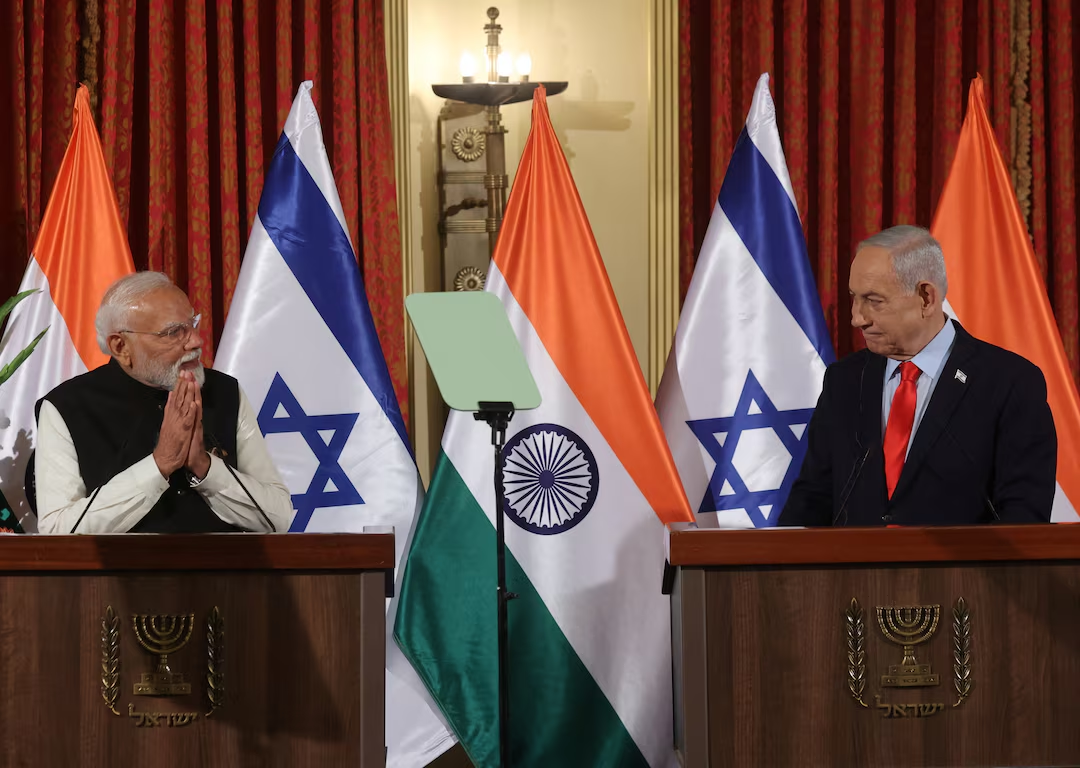
Let me begin with something that often gets lost in the noise surrounding high-level diplomatic visits. Foreign policy engagements of this nature, bilateral summits, state visits, ministerial exchanges, are not arranged overnight. They are the product of months of institutional planning, coordinated across embassies, foreign ministries, and strategic desks on both sides. The timing of Prime Minister Modi’s visit to Israel in February 2026 reflects none of the external narratives being circulated about it. It reflects careful diplomatic scheduling, rooted in national interest and bilateral institutional momentum. India engages all its partners regularly, Israel, Gulf nations, Palestine, and beyond, based on strategic priority, not political optics. Anyone who has worked in or around foreign policy architecture understands this instinctively. The rest, frankly, is noise.
I say this not to dismiss legitimate public curiosity, but to establish a baseline of analytical honesty. From my personal experience in studying international relations and geopolitics, I have found that foreign policy decisions are strategic, not emotional. With respect to Indian foreign policy, India’s partnerships are about development, security, and long-term national interest, not identity politics. And it is important, particularly in today’s polarised information environment, that diplomatic engagement not be conflated with domestic political narratives. These are two entirely different planes of discourse, and collapsing one into the other serves neither good analysis nor good policy. India has consistently maintained strong, warm, and productive relations with Israel, with Gulf countries, and with the Palestinian people simultaneously, including consistent support for humanitarian assistance and a two-state solution. This is not a contradiction. This is what a mature, strategically autonomous foreign policy looks like in practice.
I remember my lessons from a classroom lecture on the Foreign Policy of Israel at SIS in JNU, taught by P.R. Kumarswamy, who is a leading expert on Israel, mentioning that India’s position on West Asia has always been grounded in a clear principle: support for peaceful resolution and long-term stability in the region. India has contributed humanitarian assistance, supported international law, and engaged diplomatically across all sides of the regional equation. This balanced posture is not a recent invention. It is a decades-long institutional commitment that has survived multiple governments, multiple regional crises, and multiple geopolitical shifts. It is precisely this credibility that makes India a valued interlocutor across the region, and it is this credibility that gives India-Israel relations their unique strategic depth without compromising India’s other partnerships.
Now, to the substance of what this partnership actually represents, because that is where the real story lies. My research on AI in defence and security policy has led me to closely track the evolution of India-Israel bilateral cooperation over the years, and what I have observed is a relationship that has quietly but decisively transformed from one defined by defence procurement into one defined by technology co-development, innovation collaboration, and shared strategic futures. The foundations were agricultural. Israeli innovations in drip irrigation and precision farming, developed out of existential necessity in an arid landscape, have touched over 150,000 farmers across India through Indo-Israel Centres of Excellence in states like Rajasthan, Gujarat, and Maharashtra. For a country where agriculture still employs nearly half the workforce, this is not peripheral diplomacy. This is development cooperation with direct human impact at scale.

Similarly, the water technology has been equally consequential in this regard. India’s water stress challenges and Israel’s global leadership in desalination, wastewater recycling, and smart water management have created a natural and enduring partnership lane. Similarly, trade, negligible in the early 1990s, has grown into a substantive bilateral economic relationship, with technology goods, diamonds, defence equipment, and pharmaceuticals forming the core. The interesting stuff is that the startup and innovation collaboration has also gained significant momentum, with Indian technology companies establishing a meaningful presence in Tel Aviv, and Israeli deep-tech firms increasingly eyeing India’s massive digital economy as a deployment and co-development ground. These are the practical, development-focused anchors of a relationship that is often mischaracterised as solely a defence arrangement.
But it is in the frontier technology domains, artificial intelligence, cybersecurity, autonomous systems, and quantum computing, that I believe this partnership is entering its most consequential phase. In my recently published paper, “Artificial Intelligence and the Nuclear Deterrence Paradox: Rethinking Deterrence in South Asia and the Middle East” (Journal of World Affairs, SAGE Publications), I argue that AI is fundamentally compressing military decision-making timelines in ways that traditional deterrence theory was never designed to handle. The 2025 India-Pakistan crisis illustrated this in live, real-time conditions. And it is precisely this finding that makes the depth of India-Israel AI cooperation, formally institutionalised through a dedicated AI cooperation MoU and a Horizon Scanning and Strategic Foresight Mechanism announced during the February 2026 visit, so strategically significant, and so worthy of careful doctrinal attention.
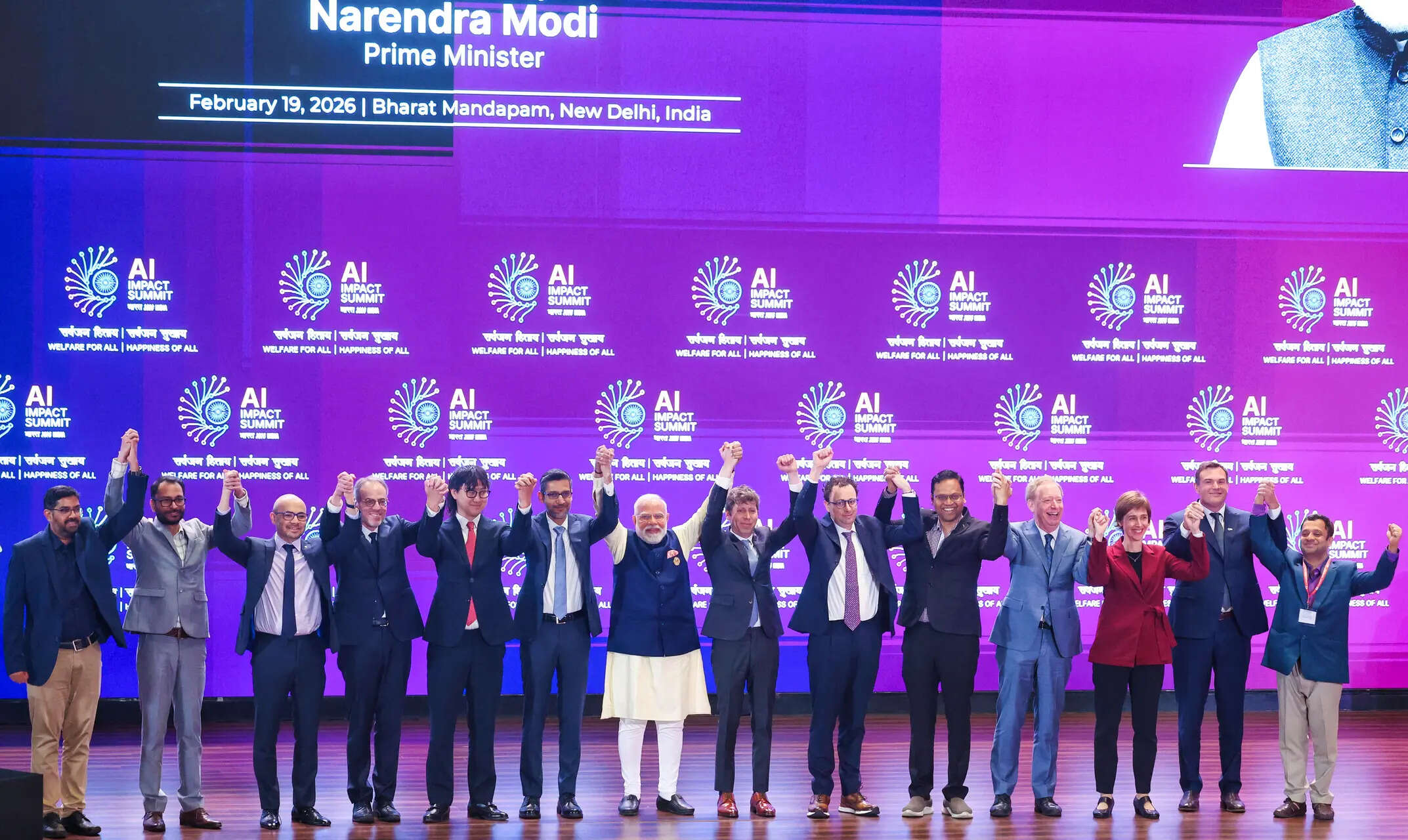
This is quite essential in this context because Israel is a global leader in cybersecurity and AI-enabled defence. Companies like Check Point and CyberArk, and a dense ecosystem of intelligence-linked deep-tech startups, have made Israel one of the world’s most operationally tested AI-defence environments. For India, which is building its own AI infrastructure at scale through IndiaAI Mission 2.0, launched at the AI Impact Summit 2026 in New Delhi, where 89 countries signed the New Delhi Declaration on AI Impact, this partnership represents access to the operational depth and battlefield-tested innovation that India’s own AI-defence ecosystem is still developing. India arrived at that summit not as a passive participant but as a global leader in AI governance, presenting the MANAV Vision for sovereign, ethical, and human-centric AI development. The Israel visit, days later, was the natural next move: deepening a bilateral partnership with the world’s most AI-capable defence democracy.
Considering this deepening cooperation, defence technology cooperation has similarly evolved beyond procurement. India is one of Israel’s largest defence export markets, with Heron UAVs, Barak missile systems, and Spike anti-tank platforms having shaped Indian military capability across services. But the 17th Joint Working Group on Defence Cooperation in November 2025 marked a structural pivot toward co-development, covering joint work on autonomous systems, AI-integrated surveillance platforms, counter-drone technologies, and loitering munitions. My research on AI in defence and security policy finds this shift, from buyer-seller to genuine technology partner, to be the defining characteristic of this new phase in India-Israel relations. Atmanirbhar Bharat and Israeli defence innovation are, in this sense, deeply complementary philosophies, both oriented toward sovereign capability development and both recognising that the future of defence lies in AI-enabled, networked, autonomous systems.
There is, however, one dimension of this deepening partnership that I believe demands explicit doctrinal attention, and my published research compels me to raise it. Both India and Israel operate in regions where nuclear weapons are live strategic instruments. As AI gets integrated more deeply into defence architectures in both countries, shaping surveillance, target recognition, decision-support, and autonomous response systems, the risks of inadvertent escalation, miscalculation, and unintended nuclear signalling increase in ways that are not yet governed by any bilateral framework. I have argued in my research that the solution lies in developing what I call a bilateral Nuclear-AI Doctrine: a structured framework that explicitly governs how AI-enabled defence systems interact with nuclear command, control, and communication architectures. This is not a hypothetical future challenge. Based on my analysis of recent conflict dynamics in both South Asia and the Middle East, it is a present strategic imperative. And the India-Israel Special Strategic Partnership, precisely because of its institutional depth and mutual democratic trust, is uniquely positioned to be the first bilateral framework in the world to address it seriously.

This is ultimately why I believe the India-Israel partnership matters far beyond the bilateral relationship itself. India brings democratic legitimacy, a massive AI talent pipeline, a sovereign governance philosophy articulated through the New Delhi Declaration, and the moral authority of a nation committed to technology for development and human dignity. Israel brings operational depth, innovation density, and the most battle-tested AI-defence ecosystem in the democratic world. Together, they represent a model of AI-defence partnership that is simultaneously capable, responsible, and doctrine-anchored, one that the world desperately needs and does not yet have. If India and Israel build the doctrinal and governance architecture to match their technological ambition, they will not merely be partners in AI. They will be the architects of what responsible, sovereign, and strategically coherent AI-defence integration looks like for democracies navigating the most complex security environments of the 21st century. That, in my assessment, is the real significance of this visit and this partnership.
Views expressed are those of the author(s)
