Article by Aditi Dubey
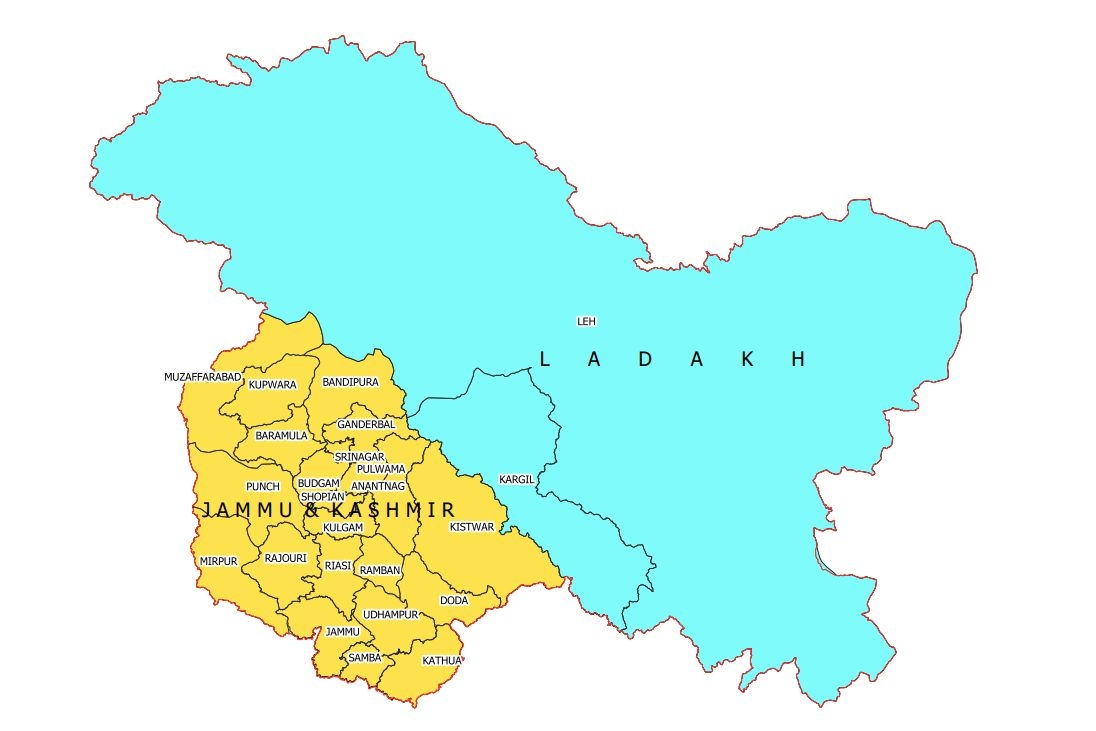
In the scenic yet deeply troubled hills of Pakistan-occupied Kashmir (PoK), also referred to as Pakistan-administered Jammu and Kashmir, simmering public anger has once again boiled over into open revolt. Residents of Muzaffarabad, Rawalakot, Mirpur, Kotli and other towns have taken to the streets in large numbers, protesting exorbitant electricity tariffs, shortages of subsidised flour, governance failures and denial of basic rights- only to face bullets, batons and brutal suppression by Pakistani forces. What begins as legitimate economic grievances is met with deadly force, mass arrests and communication blackouts, resulting in deaths, injuries and the isolation of entire communities. This recurring cycle of protests, persistent poverty and ruthless power reveals Pakistan’s systemic failure and its willingness to suppress its own people.
Recent demonstrations led by the Jammu Kashmir Joint Awami Action Committee (JKJAAC) centred on a 38-point charter addressing electricity tariffs, essential supplies, political reforms and elite privileges. In 2025 and 2026, strikes triggered clashes that left at least nine to eleven people dead in major incidents, with hundreds injured. Pakistani authorities responded with prolonged internet shutdowns, deployment of paramilitary forces, mass arrests and the banning of the JKJAAC under anti-terror laws- a pattern that exposes Islamabad’s preference for force over dialogue.
Despite abundant hydropower resources, PoK residents face some of the highest electricity rates in the region while revenue flows outward to Pakistan. High unemployment, crumbling healthcare, poor infrastructure and limited education keep the area trapped in poverty. Locals repeatedly voice frustration over the absence of genuine autonomy, with crucial decisions imposed from Islamabad. The region’s strategic value has brought little benefit to its people.

Global Concern Over Pakistan’s Heavy-Handed Response
Pakistan’s handling of the unrest has drawn strong international criticism. Amnesty International condemned the crackdown as “violent and sweeping,” citing deadly use of force, arbitrary arrests, communication blackouts and the misuse of anti-terror laws against peaceful protesters. The organisation reminded Pakistani authorities of their obligation under international human rights law to protect peaceful assembly and conduct impartial investigations into all fatalities.
In the United Kingdom, a cross-party group of British MPs, including members of the All-Party Parliamentary Group on Kashmir, wrote to the UK Foreign Secretary expressing “deep concern” over escalating violence, restrictions on civil liberties and communication blackouts. They urged diplomatic engagement for de-escalation and dialogue. Kashmiri diaspora communities in London, Birmingham, Bradford and Manchester have staged protests outside Pakistani missions, amplifying global calls for accountability.
These events stand in sharp contrast to India’s position. India has consistently maintained that the entire Jammu and Kashmir, including PoK, is an integral part of the country based on the 1947 accession. New Delhi highlights the situation in PoK and Gilgit-Baltistan, marked by enforced disappearances, curbs on freedoms, limited constitutional rights and economic neglect — to expose the hollowness of Pakistan’s claims on the Kashmir issue. While India continues democratic elections, development programmes and integration efforts in its part of Jammu and Kashmir despite cross-border terrorism, Pakistan responds to its own people’s peaceful demands with repression.
From India’s diplomatic perspective, the PoK unrest severely undermines Pakistan’s credibility. A country that routinely suppresses protests over bread-and-butter issues and imposes blackouts to hide its failures is ill-positioned to lecture the world or India on human rights. India has used global forums to stress the need for transparency and accountability on both sides of the Line of Control, repeatedly drawing attention to how Pakistan prioritises control through coercion rather than addressing genuine grievances.
The human cost is undeniable. Students lose months of education during shutdowns. Businesses collapse under repeated strikes and curfews. Families mourn loved ones killed over demands for affordable power and food. A new generation grows up witnessing state force instead of opportunity. Structural issues such as lack of full representation in Pakistan’s institutions, centralised control from Islamabad and severe restrictions on political activity have deepened alienation and a sense of betrayal among PoK residents.
PoK remains a region of immense natural beauty and untapped potential, yet it is held hostage by governance rooted in neglect and suppression. India’s consistent narrative in global diplomacy is clear and fact-based: Pakistan must be held accountable for its treatment of the people under its control. Lasting peace and stability in the region can only emerge when Islamabad respects basic rights, shares resources equitably and allows genuine voices to be heard instead of silenced.
As images of grieving families and baton-wielding forces circulate worldwide, the international community is confronted with the reality of Pakistan-occupied Kashmir- not a dispute over territory alone, but a stark example of one nation’s failure to protect and uplift its own citizens. The revolt within PoK is a damning indictment of Pakistan’s unhealthy ways of suppressing dissent and a powerful reminder that such policies damage its standing before the world.
